

From paper charts to digital systems
In the 1960s and 1970s, medical records lived in filing cabinets. Access required phone calls, mailed requests, and patience.
By the 1990s, records became digital, but access did not. Fax and mail still dominated retrieval, and delays remained the norm. Understanding why traditional retrieval methods fall short helps explain this persistent gap.
The rise of portals and partial progress
In the 2010s, electronic medical records and patient portals became widespread. Patients gained more visibility into their own data, but legal access lagged behind. Information remained siloed and difficult to aggregate.
Patient rights and interoperability change everything
Federal initiatives like the 21st Century Cures Act and TEFCA reshaped the health data landscape. Patient-directed access and nationwide interoperability became real for the first time.
This shift created an opportunity to rethink how legal teams access medical data. The medical records bottleneck that plagued firms for decades finally had a structural solution.
SettLiT and the modern standard
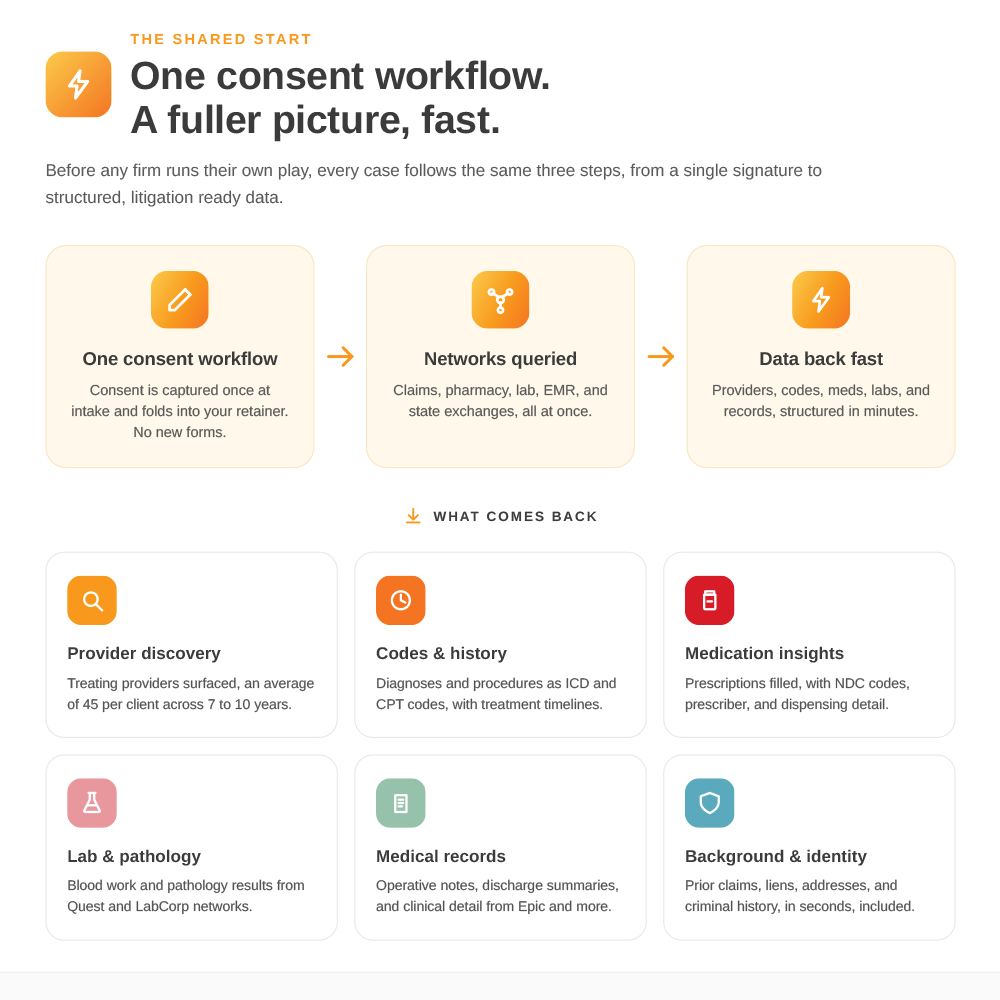
SettLiT was built specifically for this moment. After years of policy work, network certification, and platform development, SettLiT now gives personal injury and mass tort firms modern access to health data at scale.
This is not just faster record retrieval. It is a new operating model for litigation. For mass tort qualification at scale, this transformation is essential. Getting the right data at the right time is now possible.
Final thought
Health data has evolved. Legal workflows are finally catching up.
SettLiT represents the modern standard for how law firms access medical records, evaluate cases, and move faster with confidence. Watch our From Data to Decisions webinar or learn about our security and compliance approach.
.svg)

.png)