.png)
Thousands of Roundup Claimants. Each One Needs Individual Medical Proof.
Digital health data that scales with your glyphosate docket
Roundup litigation has produced some of the largest mass tort verdicts in history, and the dockets are still growing. Claimants allege that years of glyphosate exposure caused non-Hodgkin’s lymphoma (NHL), a diagnosis that carries significant medical complexity and a care history that rarely presents cleanly at intake.
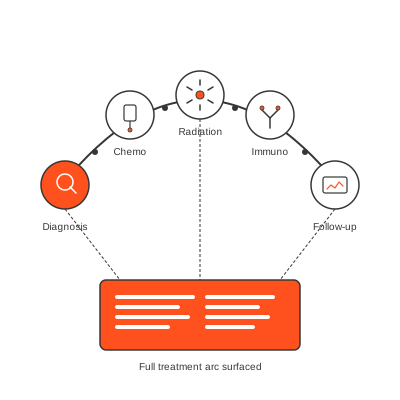
Oncologists. Hematologists. Infusion centers. Radiation facilities. The treatment record for NHL can span years and multiple institutions, and claimants often cannot account for the full picture of who treated them or where.
By the time a firm commits to a Roundup case, the medical foundation should already be visible. SettLiT makes that possible.
What Makes Roundup Dockets
Operationally Demanding
Roundup litigation requires firms to substantiate a diagnosis, document a treatment history, and establish a credible exposure timeline across a claimant population that spans agricultural workers, landscapers, and residential users. The medical record is the foundation of every case, and at intake, it is almost never complete.

inCOMPLETE INTAKE NARRATIVES
Claimants diagnosed with non-Hodgkin’s lymphoma often received care across oncology practices, hospital systems, and infusion centers over years of treatment. Reconstructing that history from a phone intake is unreliable and leaves critical gaps firms discover too late.

SLOW MEDICAL RECORD RETRIEVAL
Without knowing which oncologists, hematologists, and treatment facilities are part of the claimant’s care history, retrieval cannot begin. Identifying the right providers takes weeks before a single record is ordered.

CAPITAL DEPLOYED TOO EARLY
Firms invest in case workup before confirming the NHL diagnosis and treatment history are verifiable. Cases that cannot be substantiated still absorb the cost of that commitment.

LATE LITIGATION
SURPRISES
Defense uncovers prior diagnoses, alternative causation arguments, or treatment inconsistencies that plaintiff counsel was never aware of. In a litigation environment shaped by prior verdicts and a well-resourced defense, those surprises carry significant strategic cost.
Build the Medical Foundation Before You Build the Case
The firms building the strongest Roundup dockets are not starting with retrieval. They are starting with structured health data that tells them whether the diagnosis and treatment history support the case before resources are committed.
What SettLiT Surfaces in Roundup Cases
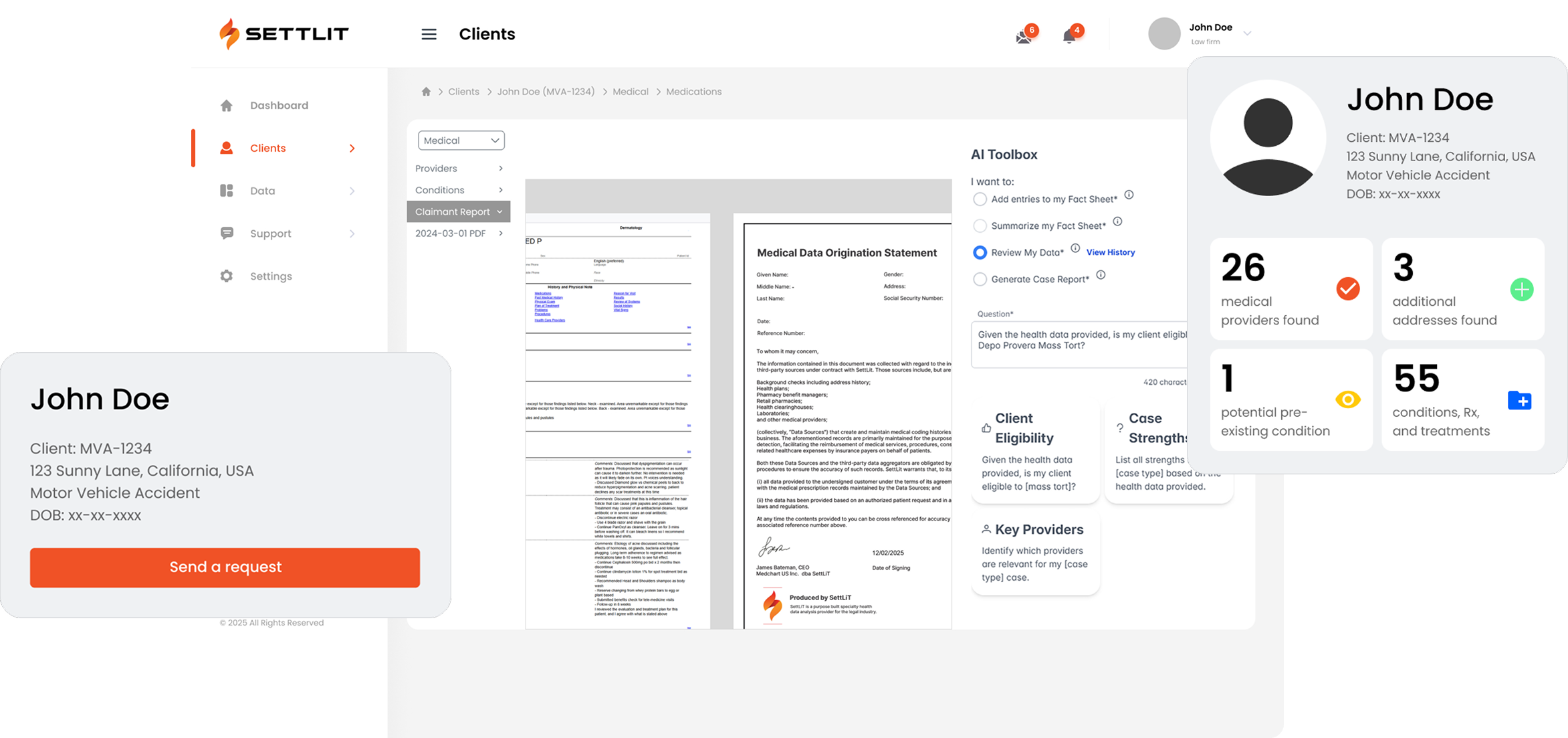
SettLiT connects to national health data networks and structured medical datasets to surface the signals that matter in Roundup litigation.
These may include:

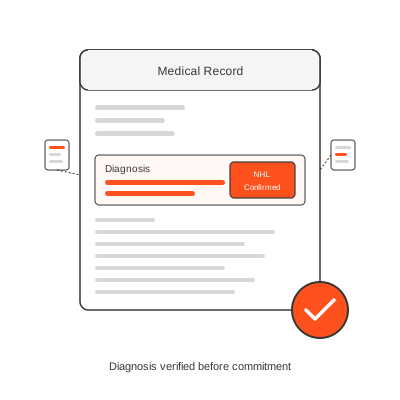
Claims data returns Non-Hodgkin's lymphoma diagnoses confirming the qualifying injury before case commitment

Laboratory and pathology reporting when available

Provider discovery identifies oncologists, hematologists, and treatment facilities across the claimant's care history

Non-Hodgkin’s lymphoma diagnoses and related hematological conditions
Mapping Data to Roundup Eligibility
Roundup claims require proof of exposure and Non-Hodgkin's lymphoma diagnosis. SettLiT maps directly to the evidentiary requirements:

Direct Contact with Roundup/Glyphosate for 2+ years
Background check returns address history in agricultural regions (California, Iowa, Nebraska, Kansas) supporting occupational or residential exposure

Diagnosed with Non-Hodgkin's Lymphoma
Claims data returns ICD-10 codes (C82-C86) for all NHL subtypes confirming the qualifying diagnosis

Oncology Treatment History
Provider discovery identifies treating oncologists and treatment facilities before manual retrieval begins
Claimant-Level Oncology Data at Scale
Roundup dockets can run into the thousands. But qualification still depends on one claimant's specific NHL diagnosis, one oncological care history, one treatment timeline that determines whether the case qualifies and at what tier.
SettLiT surfaces that individual picture at scale: structured health data across every claimant in your docket so qualification and tier decisions are grounded in verified data rather than what claimants remember from intake.
Confirm the Diagnosis Before You Commit
Firms that begin retrieval and case preparation without first establishing what the medical record contains absorb both the administrative burden and the risk of late-stage discoveries that require strategy to be rebuilt.
SettLiT surfaces structured oncological data early so teams understand what they are working with before resources are deployed. More complete case workups from the start. Less administrative effort during the retrieval phase. Faster movement from qualification to case strategy and resolution.
Why Mass Tort Firms Choose SettLit For Roundup Case Qualification

digital health Data First
Understand the oncological history before committing to case workup.

Provider discovery
Surface the full network of oncologists, hematologists, and treatment facilities relevant to each claim.

structured medical outputs
Clean, structured data in formats built for litigation workflows and team review.

Targeted retrieval enablement
Focus record requests on the providers and cases with the strongest evidentiary foundation.
Scalable docket workflows
Consistent qualification processes across hundreds or thousands of claimants.
Integration Ready Infrastructure
Built on Marble's standards-based health data infrastructure for reliable, secure connectivity.
.svg)
.svg)
.svg)
.svg)
.svg)
.svg)