.png)
One NDC Code Separates a Case from a Write-Off
Surface ranitidine dispensing records that prove brand-name Zantac use across your docket.
GSK paid $2.2 billion. Sanofi paid $250 million. The settlements are real, but only for claims that qualify.
Each claim requires documented proof of brand-name Zantac use, typically for at least one year, and a qualifying cancer diagnosis. The cancers most strongly linked to Zantac include bladder, stomach, liver, pancreatic, and esophageal cancers. At intake, claimants know they used Zantac and developed cancer, but reconstructing the use history across pharmacies, prescriptions, and OTC purchases is difficult.
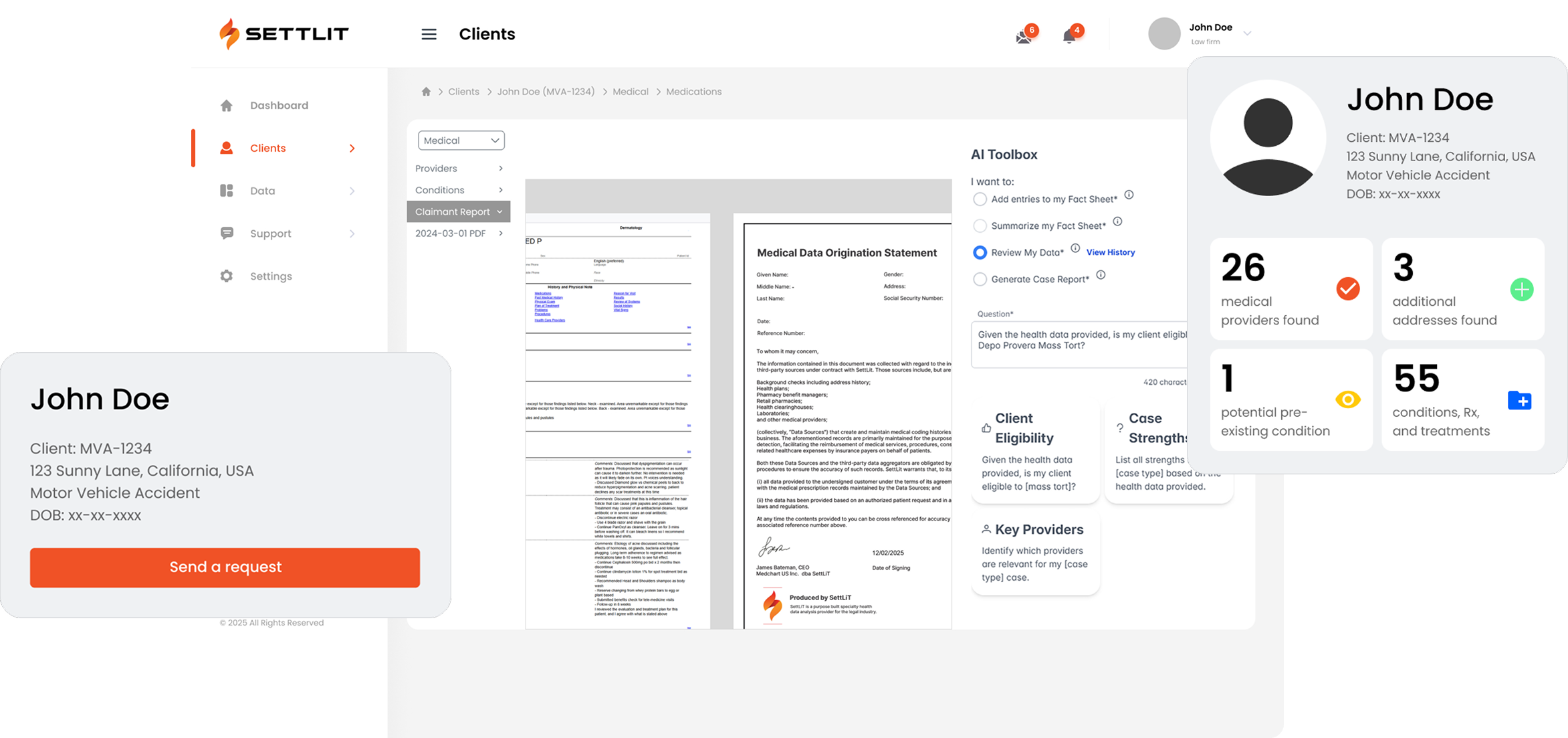
SettLiT provides the digital health data that helps firms verify brand-name use across their Zantac docket and surface the cancer diagnosis and treatment picture before requests go out.
What Makes Zantac Qualification Demanding
Zantac litigation requires firms to establish both prolonged use of brand-name ranitidine and a qualifying cancer diagnosis. Claimants used the medication for years, often switching between prescription and OTC forms across multiple pharmacies. The medical record connecting use history to cancer diagnosis is rarely assembled at intake.

inCOMPLETE INTAKE NARRATIVES
Claimants who used Zantac for years cannot always recall whether they took brand-name or generic, which pharmacies filled their prescriptions, or how long they used the medication. This makes qualification difficult before records come in.

SCATTERED PHARMACY RECORDS
Only brand-name Zantac qualifies. Generic ranitidine was not included in lawsuits. Without pharmacy records showing NDC codes, firms cannot confirm whether the claimant used qualifying products.

CAPITAL DEPLOYED TOO EARLY
Firms invest in case workup before confirming the use timeline and cancer diagnosis meet qualification criteria. Cases involving generic ranitidine or non-qualifying cancer types still absorb the cost of that commitment.

LATE LITIGATION
SURPRISES
Defense uncovers gaps in use history, generic substitutions, or alternative cancer risk factors that plaintiff counsel was never aware of. In a litigation environment shaped by Daubert challenges and expert scrutiny, those surprises carry significant cost.
Verify the Use History Before You Build the Case
The firms building stronger Zantac cases are not starting with record requests. They are starting with structured health data that confirms the use timeline and cancer diagnosis support the case before resources are committed.
What SettLiT Surfaces in
Zantac Cases
SettLiT connects to national health data networks and structured medical datasets to surface the signals that matter in Zantac litigation.
These may include:

Ranitidine dispensing records with NDC codes distinguishing brand-name Zantac from generic

Qualifying cancer diagnoses including bladder, stomach, liver, pancreatic, and esophageal

Treating providers across oncology, gastroenterology, and surgical facilities

Oncology and gastroenterology treatment history

Treatment timelines that establish the arc from first use to diagnosis
Mapping Data to Zantac Eligibility
Zantac claims require documented brand-name use and qualifying cancer diagnosis. SettLiT maps directly to the evidentiary requirements:

Ranitidine Dispensing History
Pharmacy benefit data returns Zantac and ranitidine dispensing records with NDC codes that distinguish brand-name from generic products

Qualifying Cancer Diagnosis
Claims data returns qualifying cancer diagnoses, bladder, stomach, liver, pancreatic, and esophageal, with date of first diagnosis when available

Oncology Treatment History
Claims and treatment data shows chemotherapy, radiation, surgical procedures, and ongoing cancer care
Tens of Thousands of Claims. Is Your Docket Qualified?
Zantac litigation spans tens of thousands of claims across multiple state courts. But the strength of each case still depends on one claimant's specific use history, one qualifying cancer diagnosis, one treatment timeline that either supports the claim or introduces complications.
SettLiT surfaces that individual picture at scale: structured health data across every claimant in your docket so qualification decisions are grounded in verified data rather than what claimants remember from intake.
Confirm Brand-Name Use Before You Commit
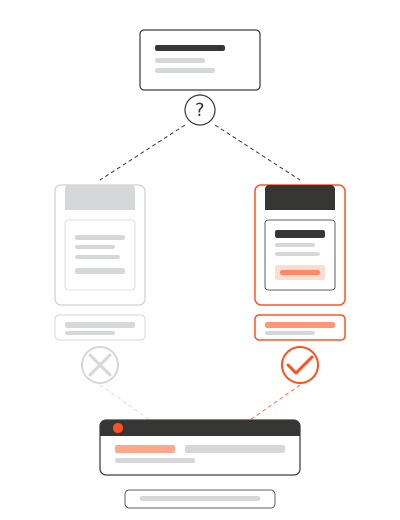
The brand vs generic distinction is the gatekeeper for Zantac claims. Claimants who used generic ranitidine do not qualify, but most cannot recall which version they took. Without pharmacy records showing NDC codes, firms commit resources to cases that may not meet threshold criteria.
SettLiT queries pharmacy benefit networks to surface dispensing records that distinguish brand-name Zantac from generic substitutions. Qualify earlier. Commit resources to the cases that meet the threshold.
Find It Before Defense Does
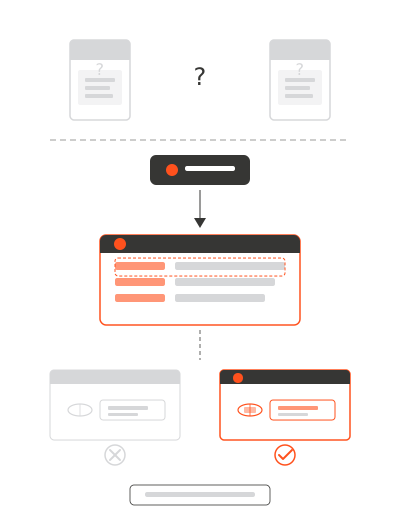
Zantac defendants have successfully defended multiple trials by challenging gaps in use history and expert causation testimony. They will find generic substitutions, gaps in use, and alternative cancer risk factors that weaken your position. The question is whether you find them first.
SettLiT gives your team the same visibility into the claimant's pharmaceutical and medical history that defense will eventually obtain. Identify disqualifying factors early. Adjust strategy before you commit resources. Build cases that survive scrutiny from day one.
Why Firms Choose SettLit For Zantac Qualification

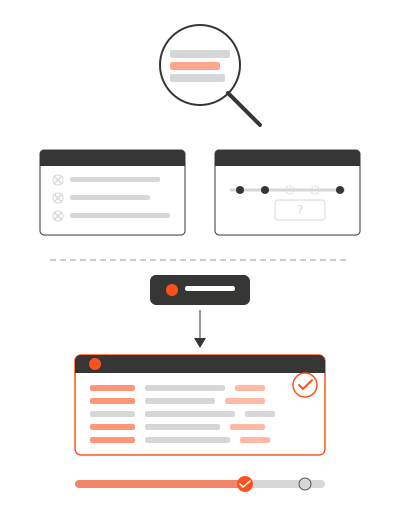
digital health Data First
Surface ranitidine dispensing records and cancer diagnoses before requests go out.

Provider discovery
Identify pharmacies, oncologists, gastroenterologists, and treatment facilities across the claimant's care history.

structured medical outputs
Receive NDC-coded dispensing records, diagnosis codes, and treatment timelines in formats built for Zantac litigation workflows.

Targeted records
Focus requests on the oncology providers and pharmacies most likely to produce records that advance the case.
Scalable docket workflows
Process thousands of Zantac claimants with the same rigor you would apply to one.
Integration Ready Infrastructure
API and portal access. Integrates with Filevine and Smart Advocate.
.svg)
.svg)
.svg)
.svg)
.svg)
.svg)